mmWave Radar Sensor Price: Affordable 24GHz & 60GHz Options
What drives mmWave radar sensor prices across 24GHz and 60GHz options? Compare module cost factors, volume tiers and how to source at factory pricing.
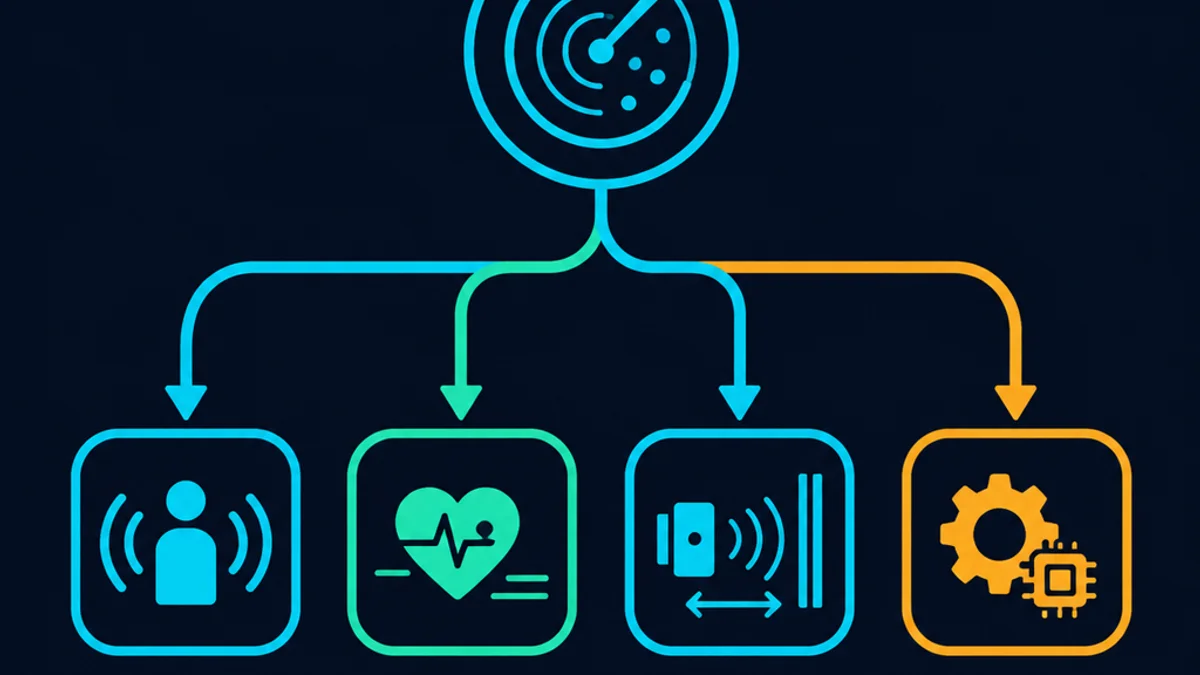
Millimeter-wave radar sensors are used to detect movement, presence, distance, speed, and sometimes breathing or occupancy without relying on visible light. When buyers search for mmwave radar sensor price, they are usually trying to understand why one module is inexpensive while another costs much more, and whether a lower-cost 24GHz or 60GHz option will still perform reliably. This guide explains the main pricing factors, how to compare modules, and what to check before choosing a cheap price 24ghz mmwave radar sensor or a cheap price 60ghz mmwave radar sensor for your project.
What affects mmWave radar sensor price?
The price of an mmWave radar sensor is affected by frequency band, detection capability, module integration, signal processing, certifications, order volume, and supplier support. A simple motion-detection module usually costs less than a sensor designed for people counting, gesture recognition, vital-sign monitoring, industrial automation, or advanced presence detection. The more intelligence, calibration, packaging, and documentation included with the module, the higher the total cost tends to be.
Frequency is one of the first pricing variables buyers notice. 24GHz radar sensors are often chosen for basic motion sensing, object detection, and cost-sensitive applications. 60GHz radar sensors are commonly used where smaller antenna size, better short-range precision, and compact integration matter. However, frequency alone does not determine value; the radar chipset, antenna design, firmware, interface, and reliability all influence whether the sensor is truly suitable.
A low purchase price can be attractive, but the cheapest module may not be the least expensive choice over the life of a project. If a sensor lacks stable firmware, proper documentation, consistent supply, or easy integration, engineering time can quickly erase any upfront savings. A good price should be judged against performance, development effort, and long-term availability.

24GHz and 60GHz radar sensors serve different needs
A cheap price 24ghz mmwave radar sensor can be a practical choice for basic detection tasks where the system needs to sense motion, trigger lighting, monitor a zone, or detect general presence. These modules are often used in smart lighting, automatic doors, security devices, simple occupancy detection, and low-power IoT products. They can offer dependable performance when the detection requirements are clear and the environment is not overly complex.
A cheap price 60ghz mmwave radar sensor is usually considered when a product needs more compact hardware, finer short-range sensing, or more advanced presence detection. In many designs, 60GHz radar is attractive because the wavelength allows smaller antennas and potentially more compact sensor layouts. This can be useful for smart home devices, in-cabin sensing, healthcare-adjacent monitoring, robotics, and consumer electronics where size and sensitivity matter.
The better choice depends on what the product must detect. If the goal is to know whether someone entered a room or whether an object is moving, a 24GHz option may be enough. If the goal is to detect subtle movement, improve short-range resolution, or fit the radar into a tight enclosure, a 60GHz module may be worth the additional evaluation.
The real cost is more than the module
When comparing mmwave radar sensor price, it helps to think beyond the number on a quotation. The module is only one part of the overall cost. Integration, firmware tuning, enclosure design, testing, and production support can all affect the final budget.
A radar sensor that is slightly more expensive but easier to integrate may save time during development. Clear documentation, sample code, stable communication protocols, and responsive technical support can reduce trial and error. This is especially important for teams building commercial products, where schedule delays can cost more than the difference between two modules.
Consider these cost elements before choosing:
- Hardware price: The base cost of the radar module, development board, or finished sensor assembly.
- Minimum order quantity: Some suppliers offer a low unit price only at higher volumes.
- Firmware support: Preconfigured detection modes can reduce development effort.
- Interface compatibility: UART, I2C, SPI, GPIO, or other interfaces may affect integration work.
- Antenna and enclosure design: Radar performance can change depending on housing material and placement.
- Testing time: Different environments may require field testing and tuning.
- Certification needs: Finished products may require regulatory, safety, or industry-specific compliance work.
- Supply stability: A cheap module is risky if it becomes unavailable or changes without notice.
A fair price is not always the lowest price. It is the price that fits the required performance, development resources, and production plan.
Why are some sensors so cheap?
Some mmWave radar sensors are cheap because they are built for simple functions, use mature components, come with limited processing features, or are sold as bare modules without much support. In other cases, low pricing may reflect high-volume manufacturing, minimal packaging, basic documentation, or limited quality control. A cheap sensor can still be useful, but buyers should understand what is included and what is not.
For example, a low-cost radar module may detect motion well but struggle with static presence detection. It may work in a lab test but require extra tuning in a room with fans, glass, metal surfaces, pets, or vibrating equipment. It may also offer fewer adjustable parameters, which limits how precisely the detection zone can be shaped.
Cheap does not automatically mean poor quality. Many cost-effective modules are suitable for lighting control, hobby projects, entry-level IoT products, and proof-of-concept development. The risk appears when the application needs dependable detection in varied real-world conditions but the selected module was designed only for simple triggering.
Before buying the lowest-price option, ask whether the supplier provides:
- A clear datasheet with operating conditions and detection limits.
- Configuration tools or commands for sensitivity and range.
- Recommended installation guidance.
- Stable firmware versions.
- Batch-to-batch consistency.
- Support for future orders.
- Realistic information about what the sensor cannot do.
These details help separate a genuinely good-value module from a part that only looks inexpensive at first.
Matching sensor type to application
The best way to control cost is to choose the right sensor for the job. Overbuying can make the product unnecessarily expensive, while underbuying can create performance problems that are hard to fix later. A clear application definition makes the pricing conversation much easier.
Smart lighting and occupancy sensing
For lighting control, the sensor usually needs to detect whether a person is present or moving within a specific area. A 24GHz module can often be suitable for basic motion-triggered lighting, especially where fine detail is not required. If the system must detect very small movements, such as a seated person working quietly, a 60GHz presence sensor may be considered.
The key is to test for false triggers and missed detections. Airflow, ceiling fans, nearby corridors, glass partitions, and reflective surfaces can all affect radar behavior. A slightly higher-quality module with better filtering may improve user experience and reduce complaints.
Smart home and consumer devices
Smart home products often need compact size, low power consumption, and reliable behavior in changing environments. In this category, buyers may compare a cheap price 60ghz mmwave radar sensor with a lower-cost 24GHz option to decide whether the added sensing capability is worth it. For devices that sit on a desk, mount on a wall, or fit into a small enclosure, antenna size and detection stability matter as much as the base price.
Consumer products also need repeatable behavior. If one batch performs differently from another, support costs can rise. When evaluating suppliers, ask whether the module design is stable or likely to change.
Industrial and automation projects
Industrial applications may involve dust, vibration, temperature variation, machinery, and complex reflective surfaces. In these environments, low cost should not be the only priority. The sensor must be robust enough for the installation conditions and predictable enough for automation logic.
An inexpensive radar module can be useful for simple object presence or motion detection, but more demanding tasks may require stronger filtering, better housing, wider operating ranges, or advanced signal processing. For industrial use, documentation and technical support are especially valuable.
Robotics and moving platforms
Robots, drones, and automated equipment may use radar for obstacle detection, distance estimation, or environmental awareness. These applications require careful evaluation because sensor movement changes the radar return. A module that works well when fixed to a wall may behave differently on a moving device.
For robotics, the lowest mmwave radar sensor price is rarely the only deciding factor. Latency, field of view, update rate, mounting position, and data output format can all affect performance. Developers should budget time for testing under real motion conditions.

A practical checklist for comparing suppliers
Price comparison becomes easier when every supplier is evaluated using the same criteria. Instead of asking only for the cheapest unit cost, request enough information to understand the complete offer. This reduces surprises after the first samples arrive.
Use this checklist when reviewing options:
- Define the detection task: Motion, presence, distance, speed, gesture, people counting, or vital-sign-related sensing.
- Confirm the operating frequency: Check whether 24GHz, 60GHz, or another band is appropriate for the target market and product design.
- Review the detection range: Make sure the advertised range matches the real installation environment.
- Check the field of view: A wide field may be useful for rooms, while a narrow field may be better for targeted detection.
- Ask about configuration: Sensitivity, delay time, detection zones, and output modes should be adjustable if the use case requires tuning.
- Evaluate documentation: Good datasheets and application notes can shorten development.
- Test sample units: Never rely only on marketing claims or a single bench test.
- Consider enclosure effects: Plastic thickness, material, shape, and mounting angle can influence performance.
- Ask about production supply: Confirm lead time, batch consistency, and lifecycle expectations.
- Compare total cost: Include accessories, engineering time, software integration, and after-sales support.
This checklist is especially useful when comparing a cheap price 24ghz mmwave radar sensor against a cheap price 60ghz mmwave radar sensor. The lower-cost option may be right, but only if it meets the actual application requirements.
How to avoid paying for features you do not need
A common mistake is buying a radar module with advanced capability when the application only needs a simple output. For example, a basic lighting trigger may not need rich point-cloud data, advanced target classification, or complex zone mapping. Paying for those features may make sense in a premium device, but not in every project.
Start by writing a simple requirement list. Identify what the sensor must detect, the required range, the installation height, the environment, the acceptable response time, and the desired output signal. Once the must-have features are clear, separate them from nice-to-have features.
A focused requirement list might include:
- Detect human movement within a defined room area.
- Avoid false triggering from small pets or fans where possible.
- Output a simple presence signal to a controller.
- Fit behind a plastic cover.
- Operate within the product’s power budget.
- Remain available for future production.
With this type of list, suppliers can recommend a suitable module instead of quoting a generic sensor. It also helps prevent overspending on features that will never be used.
Cheap modules still need proper testing
Testing is where price differences often become visible. Two sensors may appear similar on paper but behave differently in real spaces. Radar reflections, mounting position, moving backgrounds, and nearby materials can all change detection performance.
Begin with sample testing in the actual environment whenever possible. If the sensor will be installed in a ceiling, test it at the planned height. If it will sit inside a plastic product housing, test it behind the same material. If it must work near metal, glass, or moving air, include those conditions during evaluation.
A simple test plan should cover:
- Detection when a person enters, leaves, sits, or remains still.
- False triggers from fans, curtains, pets, equipment, or vibration.
- Performance at different distances and angles.
- Behavior after power cycling.
- Stability across multiple sample units.
- Response time and delay settings.
- Communication reliability with the host controller.
This does not require a complex lab setup for early evaluation. Even practical room-level tests can reveal whether a low-cost module is acceptable or whether a more capable sensor is needed.
Good value looks different at prototype and production stages
During prototyping, developers often choose affordable modules because they need to test ideas quickly. At this stage, low price, easy availability, and simple setup are valuable. A cheap radar module can help prove whether mmWave sensing is suitable before a team invests in custom hardware or a fully optimized design.
In production, the definition of value changes. The sensor must be reliable, available in volume, consistent across batches, and supported if issues appear. A module that was perfect for a prototype may not be ideal for mass production if the supplier cannot provide stable documentation, predictable lead times, or long-term availability.
For this reason, it is wise to evaluate at least two options early: one low-cost module for fast testing and one production-oriented module that meets more formal requirements. This gives the project flexibility and avoids last-minute redesigns.
Negotiating price without sacrificing quality
If volume is expected to grow, suppliers may be able to offer better pricing based on order quantity, forecast, packaging requirements, or module customization. However, negotiation should not focus only on reducing the unit cost. It should also clarify what support, testing, and consistency are included.
When requesting a quotation, provide useful context:
- Expected annual volume, if known.
- Target application and installation environment.
- Required frequency band and detection function.
- Interface and power requirements.
- Packaging or labeling needs.
- Certification or compliance expectations.
- Sample quantity and timeline.
Clear information helps suppliers recommend a practical option and avoid quoting a part that does not fit. It also makes it easier to compare offers fairly because each supplier is responding to the same requirements.
A balanced way to choose
The right mmWave radar sensor is not always the most expensive module, and it is not always the cheapest. The best choice is the one that meets the required sensing task with acceptable integration effort, stable supply, and a realistic total cost. For simple motion applications, a cost-effective 24GHz module may be enough. For compact designs or more sensitive short-range detection, a 60GHz module may provide better value even if the initial quote is higher.
When reviewing mmwave radar sensor price, look at the complete picture: performance, documentation, firmware, supplier reliability, test results, and production plans. A cheap price 24ghz mmwave radar sensor or cheap price 60ghz mmwave radar sensor can be a smart purchase when it matches the application and comes from a dependable source. The goal is not simply to pay less; it is to choose a sensor that helps the final product work well, ship smoothly, and remain supportable over time.
Not sure which sensor fits your project?
Talk to our mmWave application engineers for a free consultation.
Specify your hotel project with our engineers
Send your room count, ceiling type, and protocol preference. We will return a sample plan and quote within 24 business hours.
- Move from general guidance into a product or application discussion.
- Use RFQ when pricing, drawings, MOQ, or launch timing needs structure.
- Keep a direct contact path visible for fast clarifications and handoff.